
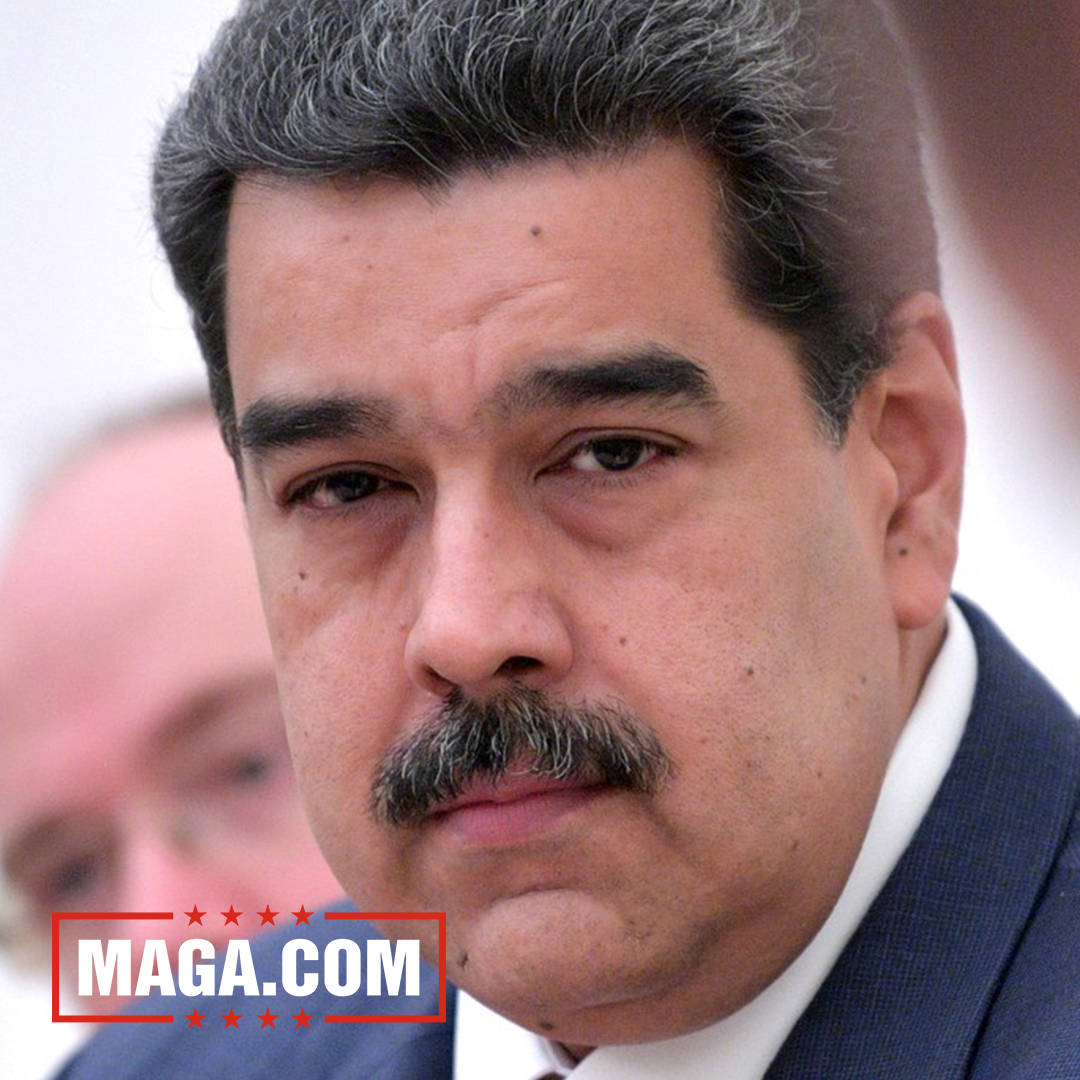
A new report claims that President Donald Trump recently gave Venezuelan President Nicolás Maduro a major ultimatum as the U.S. military continues to build up forces in the region and crack down on illegal drug trafficking operations.
According to The New York Times, Trump and Maduro had a phone call toward the end of the week of November 16. The Miami Herald reported that sources familiar with the recent conversation between Trump and Maduro told the outlet that the Trump administration offered Maduro an opportunity to save himself and some of his closest family members and top allies if he was willing to immediately resign and leave the country.
Unnamed sources told The Miami Herald that the Trump administration’s ultimatum for Maduro involved the United States guaranteeing the Venezuelan president, his wife Cilia Flores, and the Venezuelan president’s son safe passage if he immediately resigned from his position.
“First, Maduro asked for global amnesty for any crimes he and his group had committed, and that was rejected,” an anonymous source told The Miami Herald. “Second, they asked to retain control of the armed forces — similar to what happened in Nicaragua in ’91 with Violeta Chamorro. In return, they would allow free elections.”
According to The Miami Herald, the anonymous source confirmed that the Trump administration rejected Maduro’s proposals for global amnesty and continued control of the Venezuelan military, while the Venezuelan president reportedly rejected the Trump administration’s stipulation that Maduro had to resign immediately and leave the country.
During a Sunday press gaggle on Air Force One, Trump was asked by reporters whether he had recently had a phone call with Maduro. In response, Trump said, “I don’t want to comment on it; the answer is yes.” “I wouldn’t say it went well, or badly,” Trump later added. “It was a phone call.”
According to Fox News, Trump’s phone call with Maduro comes as the U.S. military has deployed its largest aircraft carrier, the USS Gerald R. Ford, and dozens of bombers to the region.
Addressing the growing U.S. military presence near Venezuela, Doug Bandow, a senior fellow at the Cato Institute, told Fox News, “U.S. militarized pressure on Venezuela is far more likely to worsen instability than to produce meaningful political change.” Bandow warned that using coercion against Venezuela has historically resulted in “unpredictable outcomes and episodes of mass flight.”
George A. López, a senior analyst for the Quincy Institute, also warned, “Escalation without a stable political alternative inside Venezuela risks accelerating the very migration pressures Washington is trying to contain.”
Share:
Video/Pics: First Lady Melania Trump unveils 'Home Is Where The Heart Is' Christmas display
Trump: No income tax 'in not-too-distant future'